

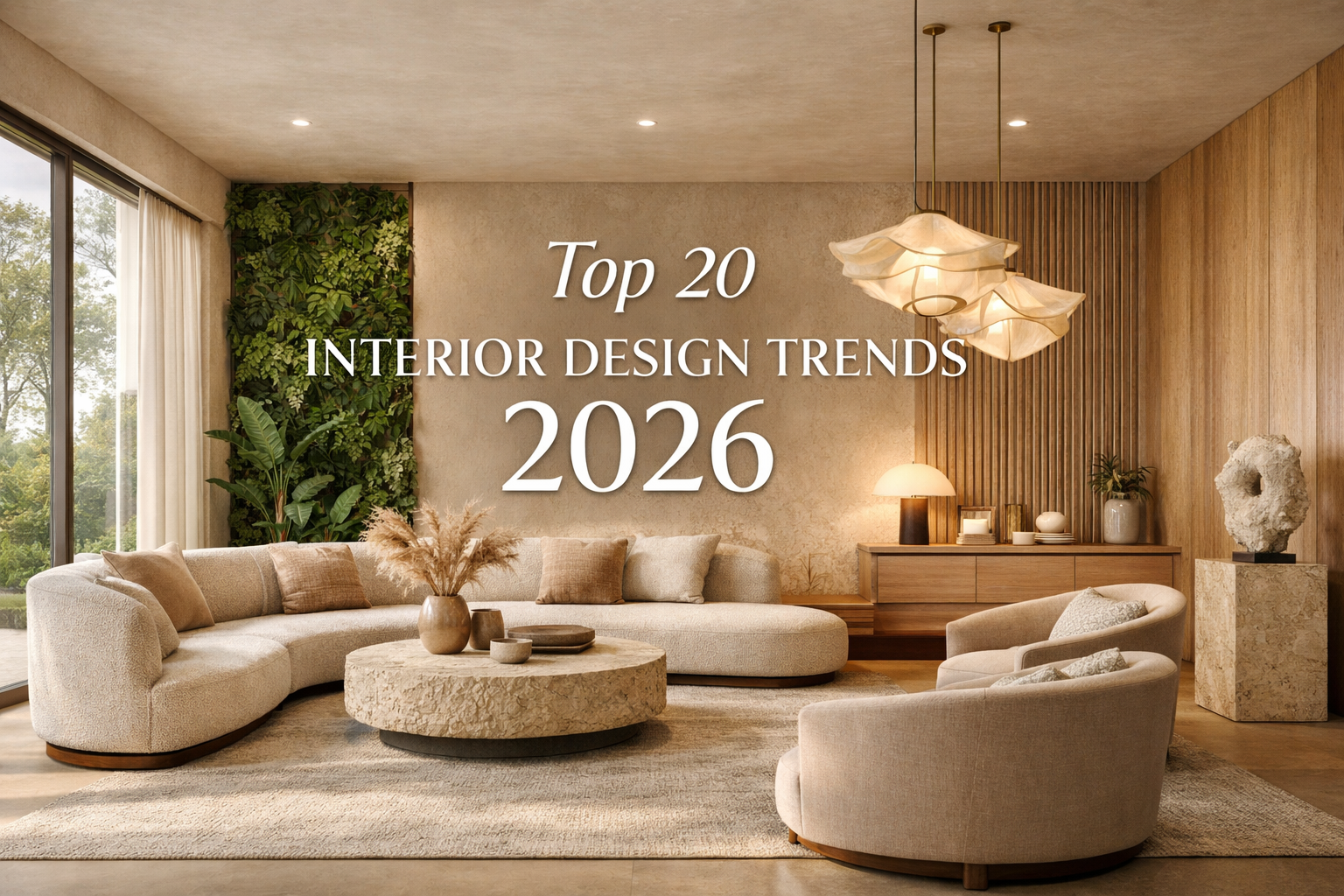
Top 20 Interior Design Trends 2026
Top 20 Interior Design Trends 2026: The Future of Modern, Sustainable & Smart Living
Introduction: Interior Design in 2026 – A Transformational Shift
Interior design in 2026 is no longer just about how a space looks—it’s about how it feels, functions, heals, and evolves with human life. As lifestyles continue to shift post-pandemic, and as technology, sustainability, and wellness converge, homes are becoming deeply personal ecosystems rather than static luxury showcases.
The year 2026 marks a turning point in global and Indian interior design. The focus is moving away from purely aspirational, high-cost aesthetics to experience-driven, wellness-oriented, and emotionally intelligent interiors. Homes today must support hybrid work lifestyles, mental well-being, sustainability goals, and personalization—without compromising on elegance or comfort.
Artificial intelligence is reshaping how spaces are planned. Sustainable materials are no longer optional but essential. Smart homes are becoming quieter, more intuitive, and invisible. Meanwhile, homeowners are demanding interiors that tell their stories—reflecting their values, routines, and identities.
In India, especially in urban apartments, villas, and premium residences, global interior design trends are being thoughtfully adapted to local climate, culture, craftsmanship, and lifestyle needs. The result is a powerful blend of technology, tradition, sustainability, and emotional design.
At Vistaar Designs – best Interior Designers in Noida, we view 2026 as the era of intentional interiors—spaces designed with purpose, intelligence, and soul. Let’s explore the Top 20 Interior Design Trends of 2026 shaping the future of modern, sustainable, and smart living.
Top 20 Interior Design Trends 2026
1. AI-Designed Personalized Interiors
AI-driven interior design is revolutionizing how homes are conceptualized in 2026. Artificial intelligence tools now analyze lifestyle patterns, spatial behavior, lighting preferences, and emotional responses to create highly personalized design solutions. From mood-based color recommendations to optimized furniture placement, AI enhances both beauty and functionality.
For compact Indian apartments, AI helps maximize usable space while ensuring comfort. Smart planning algorithms suggest modular furniture, storage placement, and lighting strategies based on daily routines. Rather than replacing designers, AI empowers them to deliver data-backed creativity, resulting in homes that adapt seamlessly to individual needs.
2. Sustainable & Carbon-Neutral Interiors
Sustainability is no longer a design trend—it’s a responsibility. Interior design trends in 2026 strongly emphasize carbon-neutral materials and eco-conscious practices. Bamboo, cork, reclaimed wood, recycled stone, and sustainable laminates are becoming mainstream.
Low-VOC paints, eco-friendly adhesives, and responsible sourcing are now standard expectations for conscious homeowners. Sustainable interior design not only reduces environmental impact but also improves indoor air quality and long-term health. At Vistaar Designs, sustainability is integrated without sacrificing aesthetics—proving that green living can also be luxurious.
3. Biophilic Design 2.0
Biophilic design in 2026 goes far beyond placing a few indoor plants. The new approach focuses on integrating nature holistically into interiors. Living green walls, optimized daylight penetration, natural ventilation, indoor water elements, and organic textures redefine residential spaces.
This evolution enhances emotional well-being, reduces stress, and improves productivity—making it ideal for modern Indian homes where wellness is a priority. Biophilic design also connects interiors to the outdoors, especially in villas and luxury apartments with balconies and terraces.
4. Warm Minimalism (Soft Luxury)
Cold, sterile minimalism is making way for warm minimalism, also known as soft luxury. This trend blends clean lines with tactile materials, layered neutrals, and cozy textures. Think soft woods, linen fabrics, muted tones, and subtle detailing.
Warm minimalism is particularly suited for urban Indian apartments, where homeowners seek calm, clutter-free spaces that still feel inviting and lived-in. The result is understated elegance—spaces that feel luxurious without being overwhelming.
5. Earthy & Clay-Inspired Color Palettes
Earth-inspired hues dominate interior design trends in 2026. Terracotta, sand beige, clay brown, olive green, and muted taupes bring a sense of grounding and emotional stability to interiors.
These colors work beautifully in living rooms, bedrooms, and meditation areas, creating a connection to nature while offering warmth and depth. Earthy palettes are versatile, timeless, and perfectly aligned with sustainable design philosophies.
6. Curved Furniture & Organic Shapes
Sharp edges are softening in 2026 interiors. Curved sofas, rounded tables, arched doorways, and fluid layouts introduce organic movement into spaces. Psychologically, curved forms create a sense of safety, flow, and comfort.
In compact homes, organic shapes improve visual continuity and spatial harmony. This trend is especially popular in living rooms, lounges, and open-plan layouts where flow matters most.
7. Smart Homes with Invisible Technology
Smart homes are evolving toward invisible intelligence. In 2026, technology blends seamlessly into interiors without visual clutter. Concealed automation systems control lighting, climate, curtains, and security through voice or mobile apps.
The focus is on experience rather than gadgets—ensuring homes remain elegant, minimal, and intuitive. Invisible technology enhances comfort while preserving design aesthetics.
8. Multi-Functional Spaces for Hybrid Living
Hybrid living demands adaptable interiors. Multi-functional spaces—home offices that transform into guest rooms, dining areas doubling as workspaces—are essential in 2026.
Foldable furniture, sliding partitions, modular layouts, and smart zoning allow homes to evolve throughout the day. This trend is particularly important for Indian urban households with limited square footage.
9. Textured Walls & 3D Surfaces
Flat walls are giving way to tactile, textured surfaces. Lime plaster, microcement, fluted panels, stone finishes, and 3D wall treatments add depth without heavy décor.
Textured walls work exceptionally well as feature walls in living rooms, bedrooms, and entryways, creating visual interest while maintaining minimalism.
10. Japandi Style Evolution
Japandi—an elegant fusion of Japanese minimalism and Scandinavian warmth—continues to evolve in 2026. Clean lines, neutral palettes, natural wood, and functional simplicity define this style.
Perfect for modern Indian lifestyles, Japandi interiors promote calm, order, and balance while remaining warm and practical.
11. Statement Lighting as Art
Lighting becomes sculptural in 2026. Statement pendant lights, artistic chandeliers, and custom fixtures act as focal points within interiors.
Layered lighting—ambient, task, and accent—enhances mood and functionality. Lighting design is now as important as furniture selection.
12. Bold Accent Ceilings
The ceiling is no longer ignored. Known as the “fifth wall,” ceilings in 2026 feature wooden beams, subtle colors, textures, and indirect lighting.
Accent ceilings add depth and drama without overwhelming the space, especially in living rooms and bedrooms.
13. Vintage & Retro Revival
Mid-century modern furniture, retro patterns, and vintage décor make a strong comeback. Blending old-world charm with contemporary layouts creates character-rich interiors.
This trend supports sustainability by encouraging reuse, restoration, and thoughtful curation of furniture.
14. Local & Handcrafted Design Elements
Indian craftsmanship takes center stage in 2026 interiors. Handmade tiles, brass accents, carved wood, and artisanal textiles add authenticity and cultural depth.
Integrating local artistry within modern design celebrates heritage while supporting sustainable livelihoods.
15. Luxurious Natural Materials
Luxury in 2026 is defined by authenticity. Marble, travertine, onyx, solid wood, and natural stone replace synthetic alternatives.
The challenge lies in balancing luxury with durability—something experienced designers like Vistaar Designs execute with precision.
16. Wellness-Focused Interior Design
Homes become sanctuaries for mental and physical well-being. Meditation corners, yoga spaces, acoustic comfort, and circadian lighting systems define wellness-focused interiors.
Designing for mental health is no longer optional—it’s essential.
17. Color-Drenched Rooms
Color drenching involves using a single hue across walls, ceilings, and furnishings to create immersive spaces.
When done thoughtfully, bold yet soothing colors create dramatic, cohesive interiors—ideal for bedrooms, powder rooms, and lounges.
18. Smart Storage-Driven Design
Clutter-free living is a priority. Hidden storage, built-in cabinetry, and multifunctional furniture enhance usability without visual chaos.
Smart storage supports minimal aesthetics while improving daily convenience.
19. Sustainable Luxury Kitchens & Bathrooms
Kitchens and bathrooms become sustainable luxury zones. Water-saving fixtures, energy-efficient appliances, and minimalist layouts define modern utility spaces.
Spa-like bathrooms and functional luxury kitchens enhance both lifestyle and property value.
20. Personal Storytelling Through Design
In 2026, homes tell stories. Custom artwork, travel memorabilia, personal collections, and bespoke details transform interiors into emotional narratives.
Personalized design creates deeper connections between homeowners and their spaces.
Expert Insight: Interior Designers’ Perspective on 2026
According to Vistaar Designs, personalization, sustainability, and wellness will dominate interior design decisions in 2026. Buyers increasingly view interiors as long-term investments that influence lifestyle quality and real estate value. Smart, sustainable homes command higher market demand, making thoughtful interior planning more important than ever.
Conclusion: Designing Homes for the Next Decade
The top interior design trends of 2026 reflect a powerful shift toward intentional, intelligent, and human-centric living spaces. From AI-driven personalization and sustainable materials to wellness-focused layouts and cultural storytelling, the future of interiors is both exciting and meaningful.
For homeowners, the key is not to follow trends blindly but to adapt them thoughtfully—ensuring longevity, comfort, and relevance. Working with experienced interior designers like Vistaar Designs ensures that trends are translated into timeless, functional, and emotionally rich spaces.
As we move into the next decade, interior design will no longer just shape homes—it will shape lives.
FAQ – Top Interior Design Trends 2026
1. What are the top interior design trends 2026 homeowners should follow?
The top interior design trends 2026 focus on personalization, sustainability, wellness, and smart living. Homes are shifting from decorative luxury to experience-driven design that supports mental health, hybrid work, and eco-conscious lifestyles. Key trends include AI-designed interiors, biophilic design, warm minimalism, sustainable materials, smart storage, and wellness-focused layouts. These trends reflect how modern homeowners want spaces that are functional, emotionally comforting, and future-ready rather than purely aesthetic or trend-based.
2. How are interior design trends in 2026 different from previous years?
Unlike earlier years that focused mainly on visual luxury, the top interior design trends 2026 prioritize purpose and well-being. Design decisions are now influenced by sustainability goals, mental wellness, and evolving lifestyles such as work-from-home. Technology has become more intuitive and invisible, while natural materials and handcrafted elements are gaining importance. The shift is from “show homes” to “living homes” that adapt to people rather than forcing people to adapt to spaces.
3. Are the top interior design trends 2026 suitable for Indian homes?
Yes, the top interior design trends 2026 are highly adaptable to Indian homes, apartments, and villas. Global trends are being customized to suit Indian climate, space constraints, cultural preferences, and family-oriented living. For example, warm minimalism works well in urban apartments, while biophilic and sustainable design aligns with traditional Indian values. When planned professionally, these trends enhance both functionality and long-term value in Indian residential interiors.
4. How does sustainability feature in the top interior design trends 2026?
Sustainability is a core pillar of the top interior design trends 2026. Designers are using eco-friendly materials such as bamboo, reclaimed wood, natural stone, and low-VOC finishes to reduce environmental impact. Energy-efficient lighting, water-saving fixtures, and responsible sourcing are now standard expectations. Sustainable interiors also improve indoor air quality and health, making them practical as well as environmentally responsible for modern homeowners.
5. What role does technology play in interior design trends 2026?
Technology plays a subtle yet powerful role in the top interior design trends 2026. Smart homes are becoming more intuitive, with concealed automation systems controlling lighting, climate, and security. AI-powered design tools help personalize layouts based on lifestyle needs. Unlike earlier tech-heavy interiors, 2026 focuses on invisible technology—enhancing comfort and efficiency without disturbing the aesthetic balance of the space.
6. Are luxury interiors still relevant in the top interior design trends 2026?
Yes, but luxury has evolved. In the top interior design trends 2026, luxury is defined by quality, comfort, and authenticity rather than excess. Natural materials like marble, solid wood, and stone are preferred over synthetic finishes. Thoughtful lighting, handcrafted details, and personalized spaces represent modern luxury. The emphasis is on timeless elegance and wellness-driven comfort instead of purely ornamental or flashy interiors.
7. How do top interior design trends 2026 support wellness and mental health?
Wellness is central to the top interior design trends 2026. Homes now include meditation corners, calming color palettes, biophilic elements, acoustic comfort, and circadian lighting. These features help reduce stress, improve sleep, and enhance overall well-being. Design is no longer just visual—it supports emotional balance and mental health, making homes restorative spaces in fast-paced urban lifestyles.
8. Which colors are trending in the top interior design trends 2026?
The top interior design trends 2026 favor earthy, grounding color palettes such as terracotta, sand beige, olive green, muted browns, and soft neutrals. These colors create warmth, emotional stability, and a connection to nature. Color drenching—using a single tone across walls and ceilings—is also gaining popularity when applied thoughtfully. These palettes are timeless and work well across living rooms, bedrooms, and wellness spaces.
9. How are small apartments influenced by interior design trends 2026?
Small apartments benefit greatly from the top interior design trends 2026. Multi-functional furniture, smart storage solutions, foldable elements, and flexible layouts help maximize space. AI-based planning and minimal yet warm aesthetics make compact homes feel open and comfortable. These trends ensure that even limited square footage delivers high functionality, comfort, and modern appeal without clutter.
10. What is warm minimalism in the top interior design trends 2026?
Warm minimalism is a key feature of the top interior design trends 2026. It moves away from cold, stark minimalism and introduces warmth through textures, natural materials, layered neutrals, and soft lighting. This style creates calm, cozy interiors while maintaining clean lines and simplicity. It is especially popular in urban Indian homes where residents want peaceful, clutter-free spaces that still feel welcoming.
11. Are handcrafted and local elements part of interior design trends 2026?
Yes, handcrafted and local elements are an important part of the top interior design trends 2026. Indian craftsmanship, handmade tiles, carved wood, brass accents, and artisanal décor add authenticity and cultural depth to modern interiors. These elements support sustainability and bring uniqueness to spaces, ensuring homes feel personal rather than mass-produced.
12. How do interior design trends 2026 impact property value?
Following the top interior design trends 2026 can significantly enhance property value. Sustainable materials, smart technology, wellness-focused layouts, and timeless aesthetics make homes more attractive to future buyers. Modern, energy-efficient, and thoughtfully designed interiors are increasingly seen as long-term investments, especially in premium residential real estate markets.
13. Is biophilic design still relevant in interior design trends 2026?
Absolutely. Biophilic design is evolving as part of the top interior design trends 2026. Beyond indoor plants, it now includes living walls, natural ventilation, daylight optimization, and organic materials. This approach improves mental well-being, productivity, and emotional comfort, making it ideal for modern homes focused on health and sustainability.
14. How can homeowners avoid mistakes while following interior design trends 2026?
To avoid mistakes when adopting the top interior design trends 2026, homeowners should avoid blindly copying trends without considering lifestyle, space, and longevity. Overusing bold elements, ignoring functionality, or compromising quality for aesthetics can reduce comfort. Working with professional interior designers ensures trends are adapted thoughtfully, balancing style with practicality and long-term usability.
15. Why should homeowners work with professionals for interior design trends 2026?
The top interior design trends 2026 involve complex elements like AI planning, sustainability standards, smart technology, and wellness design. Professional interior designers understand how to integrate these trends cohesively while maintaining functionality and budget control. Experts like Vistaar Designs ensure that trends are customized to your lifestyle, home layout, and future needs—creating interiors that remain relevant for years to come.