

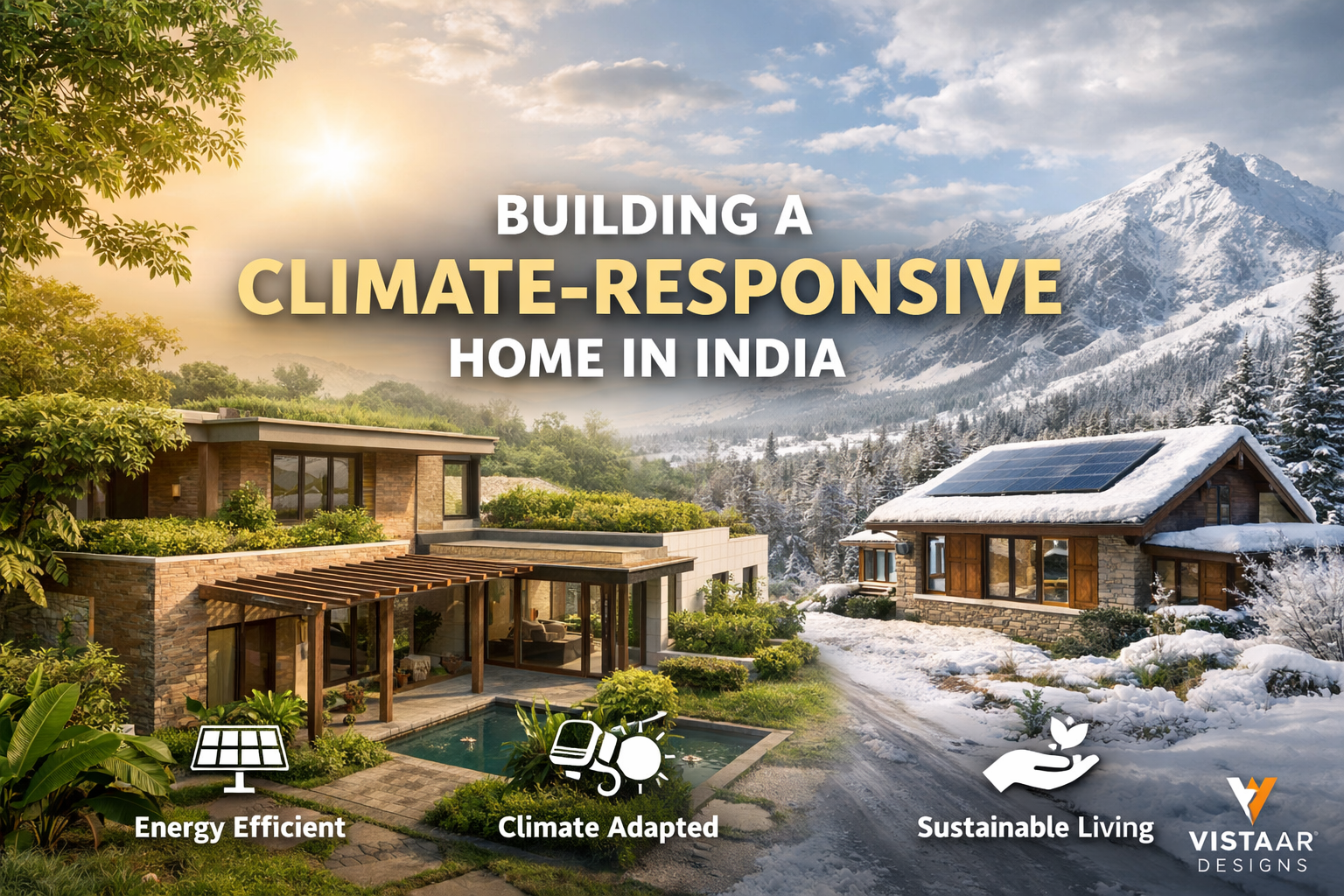
How to Build a Climate-Responsive Home in India?
1. Introduction: Why Climate-Responsive Homes Matter Today
India’s weather is no longer predictable — it’s intense, diverse, and constantly evolving. From scorching heatwaves in North India to extreme humidity in coastal regions and chilly winters in the hills, the Indian climate is becoming more challenging with each passing year. Yet, despite these conditions, most homes today are still built using standardized designs that ignore regional climate realities. This mismatch between design and environment is leading to uncomfortable living conditions and rising energy costs.
One of the most noticeable impacts is the increasing dependence on air conditioning and artificial cooling systems. Electricity bills are skyrocketing, especially during peak summer months, and homes often feel suffocating due to poor ventilation and heat trapping. Modern construction practices, heavily influenced by aesthetics and global trends, often overlook fundamental climatic considerations. Glass-heavy facades, poor orientation, and lack of shading have made homes less efficient and more energy-consuming.
This is where the concept of a climate-responsive home in India becomes critically important. A climate-responsive home is designed by understanding and adapting to the local climate — considering factors like sunlight, wind flow, temperature variations, and rainfall. Instead of fighting the environment, these homes work in harmony with it, ensuring comfort, efficiency, and sustainability.
At the forefront of this approach is thoughtful architectural planning. Firms like Vistaar Designs focus on creating homes that are not only visually appealing but also deeply connected to their surroundings. By integrating climate-smart strategies, they ensure that homes remain naturally cool in summers, warm in winters, and well-ventilated throughout the year.
The future of housing in India lies in smarter design — where sustainability meets comfort. Choosing a climate-responsive home in India is no longer a luxury; it is a necessity for modern living.
2. What is Climate-Responsive Architecture?
Climate-responsive architecture is an approach to building design that adapts to the local environmental conditions to create comfortable, energy-efficient spaces. Instead of relying heavily on mechanical systems like air conditioners or heaters, this architectural philosophy uses natural elements such as sunlight, wind, and thermal mass to regulate indoor temperatures.
At its core, climate-responsive architecture considers four major environmental factors: temperature, sunlight, wind direction, and rainfall. By analyzing these elements, architects design homes that naturally maintain thermal comfort — a state where occupants feel neither too hot nor too cold.
One of the key principles of this approach is passive design. Passive design techniques minimize the need for artificial heating and cooling by optimizing building orientation, materials, and layout. For example, placing windows strategically to allow cross ventilation can significantly reduce indoor heat. Similarly, using materials that absorb and slowly release heat can help maintain a stable indoor temperature.
Another important concept is the balance between heat gain and heat loss. During summers, the goal is to reduce heat gain by blocking direct sunlight and enhancing airflow. In winters, the design should allow maximum sunlight penetration and retain warmth within the building. This balance ensures year-round comfort without excessive energy consumption.
The idea of climate-responsive design is not new to India. In fact, traditional Indian architecture has been practicing it for centuries. Ancient homes featured courtyards that acted as natural cooling systems, jalis (perforated screens) that allowed ventilation while blocking harsh sunlight, and thick walls that provided insulation against heat. These elements were not just aesthetic choices but practical solutions tailored to the local climate.
Modern architecture, however, often ignores these time-tested strategies in favor of contemporary styles. The result is homes that look impressive but perform poorly in terms of comfort and efficiency. By revisiting and modernizing traditional techniques, architects can create homes that are both beautiful and functional.
A well-designed climate-responsive home in India blends traditional wisdom with modern technology. It reduces dependence on artificial systems, lowers energy bills, and creates a healthier living environment. This is why experienced professionals, including Architects in Noida, are increasingly adopting climate-responsive strategies to design homes that truly suit India’s diverse climatic conditions.
In essence, climate-responsive architecture is about designing smarter — creating spaces that respond to nature rather than resist it.
3. Understanding India’s Climatic Zones
India is a vast country with highly diverse climatic conditions, and this diversity plays a crucial role in how homes should be designed. A one-size-fits-all approach simply does not work here. To build a truly efficient climate-responsive home in India, it is essential to first understand the different climatic zones and their specific challenges.
1. Hot & Dry Climate (Rajasthan, Gujarat, Parts of Madhya Pradesh)
Regions like Rajasthan and Gujarat experience extremely high temperatures during the day and significant temperature drops at night. The air is dry, and solar radiation is intense.
Challenges:
- Excessive heat gain during the day
- Lack of humidity
- Harsh sunlight exposure
Design Solutions:
- Thick walls made of materials like stone or brick to reduce heat transfer
- Courtyard planning to promote internal cooling
- Small, shaded windows to minimize direct heat entry
- Use of light-colored exteriors to reflect heat
Traditional havelis in Rajasthan are a perfect example of climate-responsive design, where internal courtyards and shaded corridors naturally regulate temperature.
2. Warm & Humid Climate (Mumbai, Kerala, Chennai)
Coastal regions face high humidity levels and moderate to high temperatures throughout the year. The main issue here is not just heat, but discomfort caused by moisture in the air.
Challenges:
- High humidity leading to discomfort
- Poor air circulation
- Risk of mold and dampness
Design Solutions:
- Large windows and openings for maximum ventilation
- Elevated structures to avoid moisture accumulation
- Sloped roofs to handle heavy rainfall
- Use of breathable materials
Homes in Kerala often feature high ceilings and large verandahs, allowing air to circulate freely — a key feature of a climate-responsive home in India.
3. Composite Climate (Delhi, Noida, Lucknow)
Cities like Delhi and Noida fall under composite climate zones, where summers are extremely hot, winters are cold, and monsoons bring humidity. This makes designing homes more complex, as they must perform well in all seasons.
Challenges:
- Extreme heat in summer
- Cold winters
- Seasonal humidity
Design Solutions:
- Balanced orientation to control both heat gain and loss
- Insulated walls and roofs
- Adjustable shading devices
- Flexible ventilation systems
For this region, working with experienced Architects in Noida is crucial, as they understand how to create homes that adapt to seasonal changes efficiently.
4. Cold Climate (Himachal Pradesh, Kashmir)
In colder regions, the priority shifts from cooling to heat retention. Temperatures can drop significantly, and snowfall is common.
Challenges:
- Heat loss
- Limited sunlight
- Cold winds
Design Solutions:
- South-facing windows to capture maximum sunlight
- Thick insulated walls
- Compact building forms to retain heat
- Double-glazed windows
Understanding these climatic zones is the foundation of designing a climate-responsive home in India. Each region demands a unique approach, and ignoring these differences can lead to discomfort, higher energy consumption, and poor living conditions. This is why climate-based design is not just a trend but a necessity in modern architecture.
4. Site Analysis: The First Step to Smart Home Design
Before any design is finalized, the most critical step in building a climate-responsive home in India is a thorough site analysis. Every plot is unique — in terms of orientation, surroundings, wind patterns, and sunlight exposure — and these factors directly influence how a home should be designed.
Many homeowners make the mistake of selecting a design from Pinterest or copying layouts from other projects without considering site-specific conditions. What works for one location may completely fail in another. This is why professional architects prioritize site analysis as the foundation of smart design.
Key Elements of Site Analysis
1. Sun Path Study
Understanding how the sun moves across the plot helps in planning window placement, shading devices, and room orientation. It ensures that harsh afternoon heat is minimized while beneficial sunlight is utilized.
2. Wind Direction
Identifying prevailing wind directions allows architects to design openings that promote natural ventilation. Proper airflow reduces indoor heat and improves comfort without relying on mechanical systems.
3. Plot Orientation
The direction your plot faces (north, south, east, or west) significantly impacts heat gain and light quality. This determines where living spaces, bedrooms, and service areas should be placed.
4. Surroundings
Nearby buildings, trees, and roads affect sunlight, airflow, and privacy. For example, large trees can provide natural shading, while neighboring structures may block ventilation.
Why Site Analysis Matters
A well-executed site analysis ensures that the design responds to the environment rather than ignoring it. It helps reduce energy consumption, enhances comfort, and improves the overall performance of the home.
At Vistaar Designs, site analysis is not just a step — it is a strategy. Their approach focuses on studying every detail of the site before creating a design that aligns with climate, lifestyle, and long-term sustainability.
In essence, the success of a climate-responsive home in India begins even before construction starts. It starts with understanding the land — because smart homes are not just built, they are carefully planned.
5. Building Orientation: The Game Changer
One of the most powerful yet often overlooked aspects of designing a climate-responsive home in India is building orientation. The direction your home faces and how spaces are arranged within it can significantly impact indoor temperature, natural lighting, and energy efficiency.
In simple terms, orientation determines how much sunlight and heat your home receives throughout the day. A poorly oriented house can trap heat, increase dependency on air conditioning, and create uncomfortable living spaces. On the other hand, a well-oriented home works with nature — reducing heat gain, maximizing daylight, and improving ventilation.
Understanding Sunlight Direction
- North-facing side: Receives soft, diffused light throughout the day — ideal for living spaces and work areas.
- East-facing side: Gets gentle morning sunlight, which is beneficial for bedrooms and kitchens.
- South-facing side: Receives strong sunlight during winters (useful in colder regions).
- West-facing side: Gets harsh afternoon sun, which can significantly increase indoor heat.
Smart Orientation Strategies
- Place living rooms and frequently used spaces on the north or east side for comfortable lighting.
- Avoid large windows on the west side, or use shading elements like louvers and screens.
- Design bedrooms to receive morning light instead of harsh afternoon heat.
- Use buffer zones like staircases, bathrooms, or storage areas on heat-exposed sides.
For homes in composite climates like Delhi and Noida, orientation becomes even more critical. Summers demand protection from heat, while winters require maximum sunlight. This balance can only be achieved through careful planning.
Impact on Energy Efficiency
A well-oriented home can reduce indoor temperatures by several degrees, directly lowering the need for artificial cooling. This translates into significant savings on electricity bills over time. It also improves indoor comfort without relying on machines, making it a key feature of any climate-responsive home in India.
Experienced Architects in Noida often emphasize orientation as the foundation of climate-smart design. It is one of the simplest yet most effective ways to improve a building’s performance without increasing construction costs.
In conclusion, building orientation is not just a technical detail — it is a game changer. When done right, it transforms how a home feels, functions, and performs throughout the year.
6. Passive Cooling Techniques
In a country like India, where summers can be extremely harsh, passive cooling techniques are essential for designing a comfortable and energy-efficient home. A well-planned climate-responsive home in India uses these techniques to reduce heat naturally, minimizing the need for air conditioning.
Passive cooling focuses on controlling heat gain and enhancing airflow without using mechanical systems. These strategies not only improve comfort but also significantly lower energy consumption.1. Natural Ventilation
Ventilation is the backbone of passive cooling. Proper placement of windows and openings allows fresh air to circulate, pushing out hot air and maintaining a comfortable indoor environment.
- Use windows on opposite walls to create cross ventilation
- Align openings with prevailing wind direction
- Avoid blocking airflow with poor furniture placement
2. Cross Ventilation
Cross ventilation ensures continuous air movement inside the house. When air enters from one side and exits from another, it creates a cooling effect that reduces indoor temperature.
This technique is especially effective in warm and humid regions, where airflow is more important than temperature control.
3. Stack Effect (Hot Air Movement)
Hot air naturally rises. By designing spaces that allow hot air to escape from higher openings (like ventilators or skylights), cooler air is drawn in from lower levels.
- High ceilings enhance this effect
- Vent openings near the roof help release trapped heat
This principle has been used in traditional Indian homes for centuries.
4. Courtyard Design
Courtyards act as natural cooling systems. They create shaded zones and promote air circulation within the house.
- Air cools down as it passes through shaded courtyard spaces
- Central courtyards distribute cool air to surrounding rooms
This is a signature feature of traditional Indian architecture and a key element in modern climate-responsive home in India designs.
5. Shading Devices
Direct sunlight is one of the biggest contributors to indoor heat. Shading devices help block this heat before it enters the building.
- Chajjas (sunshades) over windows
- Louvers and screens to filter sunlight
- Pergolas for semi-shaded outdoor areas
These elements not only improve comfort but also enhance the aesthetic appeal of the home.
6. Cool Roofs
Roofs receive the maximum amount of solar radiation. Using reflective or heat-resistant materials can significantly reduce heat absorption.
- White or reflective coatings
- Insulated roofing materials
- Clay tiles or green roofs
A cool roof can lower indoor temperatures by several degrees, making it a crucial feature of passive cooling.
Cost-Saving Benefits
Implementing passive cooling techniques reduces dependency on ACs, leading to:
- Lower electricity bills
- Reduced maintenance costs
- Longer lifespan of appliances
At Vistaar Designs, these techniques are thoughtfully integrated into every project to ensure maximum comfort and efficiency. Their approach combines traditional wisdom with modern innovation, creating homes that are naturally cool and sustainable.
In summary, passive cooling is not just an option — it is a necessity for building a truly efficient climate-responsive home in India.
7. Passive Heating Strategies for Winter
While much of India focuses on cooling due to intense summers, winters in North and composite climate regions like Delhi, Noida, and Lucknow can be quite cold. A well-designed climate-responsive home in India must address both extremes — ensuring that homes stay cool in summer and warm in winter without excessive reliance on heaters.
Passive heating is all about capturing, storing, and retaining heat naturally.
1. South-Facing Windows
In India, the sun moves towards the south during winter. This makes south-facing windows extremely valuable for passive heating.
- They allow maximum sunlight to enter during the day
- Sunlight warms indoor surfaces naturally
- Reduces the need for artificial heating
Properly designed windows can turn sunlight into a free heating source.
2. Thermal Mass: Storing Heat Efficiently
Thermal mass refers to materials that absorb heat during the day and release it slowly at night.
- Materials like brick, stone, and concrete are excellent thermal masses
- During the day, they absorb solar heat
- At night, they release warmth, maintaining indoor comfort
This creates a stable indoor temperature, especially useful in regions with cold nights.
3. Insulation: Keeping Warm Air Inside
Insulation is essential for preventing heat loss.
- Insulated walls and roofs reduce heat escape
- Double-glazed windows help retain indoor warmth
- Proper sealing of gaps prevents cold air infiltration
Without insulation, any heat gained during the day is quickly lost, making interiors uncomfortable.
4. Compact Building Design
Homes designed with compact layouts lose less heat compared to spread-out structures.
- Reduced external surface area minimizes heat loss
- Efficient space planning enhances warmth retention
Balanced Design for Composite Climates
In cities like Delhi and Noida, homes must balance both passive cooling and heating strategies. The same design elements should help in blocking heat during summer while allowing sunlight in winter.
Experienced Architects in Noida carefully plan these details to ensure year-round comfort. This dual approach is essential for creating a truly effective climate-responsive home in India.
In conclusion, passive heating is about using nature wisely — capturing warmth when available and retaining it efficiently. When combined with cooling strategies, it creates a perfectly balanced living environment.
8. Material Selection: Build Smart, Not Just Beautiful
The materials used in construction play a crucial role in determining how a home responds to climate. In a climate-responsive home in India, material selection is not just about aesthetics — it directly impacts thermal comfort, energy efficiency, and long-term sustainability.
Modern construction often prioritizes appearance over performance, leading to homes that look stylish but perform poorly in extreme weather. Choosing the right materials can significantly reduce heat gain, improve insulation, and enhance durability.1. High Thermal Mass Materials
Materials like brick, stone, and mud have high thermal mass, meaning they can absorb heat and release it slowly.
- Keep interiors cool during the day
- Maintain warmth during the night
- Reduce temperature fluctuations
Traditional Indian homes used these materials effectively, which is why they remained comfortable even without modern technology.
2. AAC Blocks: Modern Energy Efficiency
Autoclaved Aerated Concrete (AAC) blocks are becoming popular in climate-smart construction.
- Lightweight yet strong
- Excellent insulation properties
- Reduce heat transfer significantly
They are ideal for modern homes aiming to balance efficiency and structural strength.
3. Lime Plaster: Breathable and Sustainable
Unlike cement plaster, lime plaster allows walls to “breathe.”
- Regulates moisture levels
- Prevents dampness
- Improves indoor air quality
It is also eco-friendly and enhances the durability of the structure.
4. Avoid Heat-Trapping Materials
Certain materials can increase indoor heat if used excessively.
- Large glass surfaces without shading
- Metal surfaces exposed to direct sunlight
- Poor-quality concrete without insulation
These materials absorb and trap heat, making interiors uncomfortable.
5. Local Materials: The Smart Choice
Using locally available materials is one of the best strategies for a climate-responsive home in India.
- Naturally suited to regional climate
- Cost-effective
- Lower transportation impact
- Better sustainability
For example, stone in Rajasthan or laterite in coastal regions performs better because it adapts to local conditions.
Vistaar Designs Approach
At Vistaar Designs, material selection is driven by performance, sustainability, and long-term comfort. Their focus is on combining traditional materials with modern innovations to create homes that are both beautiful and efficient.
Why Material Selection Matters
The right materials can:
- Reduce indoor temperatures
- Lower energy consumption
- Improve durability
- Enhance comfort year-round
In conclusion, building smart is not just about design — it’s about choosing materials that work with the environment. A thoughtfully designed climate-responsive home in India always begins with the right material choices.
9. Roof & Wall Design for Temperature Control
When it comes to controlling indoor temperature, roofs and walls play a critical role in any climate-responsive home in India. These elements form the outer shell of the building and are directly exposed to sunlight, heat, and environmental conditions. Poorly designed roofs and walls can lead to excessive heat gain, making interiors uncomfortable and increasing dependence on air conditioning.
1. Roof Design: The Biggest Heat Source
In most Indian homes, the roof receives the maximum solar radiation throughout the day. This makes it one of the primary contributors to indoor heat.
Effective roof strategies include:
- Insulated roofs: Using insulation layers to reduce heat transfer
- Cool roofs: Applying reflective coatings or light-colored finishes to bounce back sunlight
- Clay tiles or filler slabs: These reduce direct heat absorption
- Green roofs or terrace gardens: Natural insulation through vegetation
A well-designed roof can reduce indoor temperatures by several degrees, making it a key feature of a climate-responsive home in India.
2. Wall Design: Thermal Protection
Walls act as thermal barriers between the interior and exterior environment. The way they are constructed determines how much heat enters or escapes the home.
Smart wall design techniques:
- Double walls with air gaps for insulation
- Thick walls using brick or stone to slow down heat transfer
- External shading elements to protect walls from direct sunlight
- Use of cavity walls for better thermal performance
3. Surface Treatments & Finishes
The external finish of walls also affects heat absorption.
- Light-colored paints reflect heat
- Textured finishes reduce direct exposure
- Heat-resistant coatings improve performance
Why It Matters
A well-designed roof and wall system:
- Reduces indoor heat gain
- Improves thermal comfort
- Cuts down electricity usage
- Enhances long-term durability
At Vistaar Designs, special attention is given to envelope design — ensuring that roofs and walls work together to create a comfortable indoor environment. This approach is essential for building a high-performance climate-responsive home in India.
10. Windows & Openings: Light + Air Balance
Windows and openings are one of the most sensitive elements in home design. They are the primary source of natural light and ventilation, but if not designed correctly, they can also become major sources of heat gain. In a climate-responsive home in India, achieving the right balance between light and airflow is crucial.
1. Window Size & Placement
The size and position of windows determine how much sunlight and air enter the home.
- Large windows on the north side provide soft, consistent light
- Controlled openings on the west side prevent harsh heat entry
- East-facing windows allow beneficial morning sunlight
Strategic placement ensures comfort without overheating.
2. Cross Ventilation Through Openings
Windows should not be treated as isolated elements. They must be aligned to create airflow paths.
- Openings on opposite walls enable cross ventilation
- Proper airflow reduces indoor temperature naturally
- Improves indoor air quality
3. Double Glazing for Insulation
Modern homes can benefit from double-glazed windows.
- Reduce heat transfer
- Improve sound insulation
- Enhance energy efficiency
This is especially useful in urban areas with extreme temperatures.
4. Shading for Heat Control
Unshaded windows can lead to excessive heat gain.
- Use chajjas, louvers, and screens
- Install curtains or blinds for internal control
- External shading is more effective than internal solutions
5. Avoid Glass-Heavy Designs
One of the biggest mistakes in modern architecture is overusing glass without considering climate.
- Glass traps heat inside
- Increases AC dependency
- Reduces energy efficiency
Smart Design Approach
A well-designed window system:
- Maximizes natural light
- Enhances ventilation
- Minimizes heat gain
- Reduces energy costs
Experienced Architects in Noida focus on optimizing window placement to suit the local climate. This ensures that homes remain bright, airy, and comfortable throughout the year.
In conclusion, windows are not just openings — they are powerful design tools. When used correctly, they play a vital role in creating a truly efficient climate-responsive home in India.
9. Roof & Wall Design for Temperature Control
When it comes to controlling indoor temperature, roofs and walls play a critical role in any climate-responsive home in India. These elements form the outer shell of the building and are directly exposed to sunlight, heat, and environmental conditions. Poorly designed roofs and walls can lead to excessive heat gain, making interiors uncomfortable and increasing dependence on air conditioning.
1. Roof Design: The Biggest Heat Source
In most Indian homes, the roof receives the maximum solar radiation throughout the day. This makes it one of the primary contributors to indoor heat.
Effective roof strategies include:
- Insulated roofs: Using insulation layers to reduce heat transfer
- Cool roofs: Applying reflective coatings or light-colored finishes to bounce back sunlight
- Clay tiles or filler slabs: These reduce direct heat absorption
- Green roofs or terrace gardens: Natural insulation through vegetation
A well-designed roof can reduce indoor temperatures by several degrees, making it a key feature of a climate-responsive home in India.
2. Wall Design: Thermal Protection
Walls act as thermal barriers between the interior and exterior environment. The way they are constructed determines how much heat enters or escapes the home.
Smart wall design techniques:
- Double walls with air gaps for insulation
- Thick walls using brick or stone to slow down heat transfer
- External shading elements to protect walls from direct sunlight
- Use of cavity walls for better thermal performance
3. Surface Treatments & Finishes
The external finish of walls also affects heat absorption.
- Light-colored paints reflect heat
- Textured finishes reduce direct exposure
- Heat-resistant coatings improve performance
Why It Matters
A well-designed roof and wall system:
- Reduces indoor heat gain
- Improves thermal comfort
- Cuts down electricity usage
- Enhances long-term durability
At Vistaar Designs, special attention is given to envelope design — ensuring that roofs and walls work together to create a comfortable indoor environment. This approach is essential for building a high-performance climate-responsive home in India.
10. Windows & Openings: Light + Air Balance
Windows and openings are one of the most sensitive elements in home design. They are the primary source of natural light and ventilation, but if not designed correctly, they can also become major sources of heat gain. In a climate-responsive home in India, achieving the right balance between light and airflow is crucial.
1. Window Size & Placement
The size and position of windows determine how much sunlight and air enter the home.
- Large windows on the north side provide soft, consistent light
- Controlled openings on the west side prevent harsh heat entry
- East-facing windows allow beneficial morning sunlight
Strategic placement ensures comfort without overheating.
2. Cross Ventilation Through Openings
Windows should not be treated as isolated elements. They must be aligned to create airflow paths.
- Openings on opposite walls enable cross ventilation
- Proper airflow reduces indoor temperature naturally
- Improves indoor air quality
3. Double Glazing for Insulation
Modern homes can benefit from double-glazed windows.
- Reduce heat transfer
- Improve sound insulation
- Enhance energy efficiency
This is especially useful in urban areas with extreme temperatures
4. Shading for Heat Control
Unshaded windows can lead to excessive heat gain.
- Use chajjas, louvers, and screens
- Install curtains or blinds for internal control
- External shading is more effective than internal solutions
5. Avoid Glass-Heavy Designs
One of the biggest mistakes in modern architecture is overusing glass without considering climate.
- Glass traps heat inside
- Increases AC dependency
- Reduces energy efficiency
Smart Design Approach
A well-designed window system:
- Maximizes natural light
- Enhances ventilation
- Minimizes heat gain
- Reduces energy costs
Experienced Architects in Noida focus on optimizing window placement to suit the local climate. This ensures that homes remain bright, airy, and comfortable throughout the year.
In conclusion, windows are not just openings — they are powerful design tools. When used correctly, they play a vital role in creating a truly efficient climate-responsive home in India.
11. Landscape Design: Nature as a Cooling Tool
Landscape design is often seen as an aesthetic addition, but in reality, it plays a powerful role in regulating the temperature of a climate-responsive home in India. The outdoor environment directly impacts indoor comfort, and strategic landscaping can significantly reduce heat gain while improving air quality and overall living experience.
1. Trees for Natural Shading
Trees act as natural sun blockers and are one of the most effective cooling tools.
- Plant large trees on the west and south sides to block harsh sunlight
- Deciduous trees provide shade in summer and allow sunlight in winter
- Reduce surrounding temperature by several degree
2. Water Elements for Cooling
Water bodies like small ponds, fountains, or even water features help in cooling the surrounding air through evaporation.
- Reduce ambient temperature
- Improve microclimate around the house
- Enhance visual appea
3. Vertical Gardens & Green Walls
In urban areas with limited space, vertical gardens are an excellent solution.
- Act as insulation for walls
- Reduce heat absorption
- Improve air quality
4. Grass & Soft Landscaping
Replacing hard surfaces with greenery reduces heat reflection.
- Grass absorbs less heat than concrete
- Reduces the urban heat island effect
- Creates a cooler outdoor environment
Why Landscape Matters
A well-planned landscape:
- Lowers surrounding temperature
- Improves airflow
- Enhances comfort inside the house
- Adds sustainability value
At Vistaar Designs, landscape is integrated with architecture to create a complete climate-responsive ecosystem. This ensures that the home and its surroundings work together to maintain comfort.
In summary, nature is not just decoration — it is a powerful design tool for building a climate-responsive home in India.
12. Water Management & Rainwater Harvesting
Water management is a critical component of sustainable living and an essential feature of any climate-responsive home in India. With unpredictable rainfall patterns and increasing water scarcity, efficient water planning is no longer optional — it is necessary.
1. Rainwater Harvesting Systems
Rainwater harvesting allows homeowners to collect and store rainwater for future use.
- Water collected from rooftops
- Stored in underground tanks
- Used for gardening, flushing, and other non-potable needs
This reduces dependency on municipal water supply.
2. Groundwater Recharge
Instead of letting rainwater go to waste, it can be used to recharge groundwater.
- Percolation pits help water seep into the soil
- Improves water table levels
- Supports long-term sustainability
3. Proper Drainage Planning
Efficient drainage prevents waterlogging and structural damage.
- Sloped surfaces guide water flow
- Prevents flooding during heavy rains
- Protects foundation integrity
4. Water-Efficient Fixtures
Using low-flow fixtures and smart plumbing systems reduces water consumption.
- Efficient taps and showers
- Dual-flush systems
- Smart irrigation systems
Benefits of Smart Water Management
- Reduces water bills
- Ensures water availability during shortages
- Supports environmental sustainability
- Enhances property value
Vistaar Designs Approach
Vistaar Designs incorporates water management strategies right from the planning stage. Their designs ensure that every drop of water is used efficiently, contributing to a smarter and more sustainable climate-responsive home in India.
13. Energy Efficiency & Renewable Integration
Energy efficiency is at the heart of a modern climate-responsive home in India. With rising electricity costs and environmental concerns, integrating energy-efficient systems and renewable sources has become essential.
1. Solar Panels: Clean Energy Source
Solar energy is one of the most effective ways to reduce electricity bills.
- Generates renewable energy
- Reduces dependency on grid power
- Ideal for India’s sunny climate
2. Energy-Efficient Lighting & Appliances
Using energy-saving solutions can significantly lower consumption.
- LED lighting instead of traditional bulbs
- Star-rated appliances
- Smart power management systems
3. Smart Home Systems
Automation helps optimize energy usage.
- Sensors for lighting and temperature control
- Smart thermostats
- Remote monitoring systems
4. Natural Daylighting
Maximizing daylight reduces the need for artificial lighting.
- Proper window placement
- Skylights and light wells
- Reflective interior surfaces
Benefits
- Lower electricity bills
- Reduced carbon footprint
- Improved long-term savings
By integrating renewable energy and efficient systems, homeowners can create a future-ready climate-responsive home in India that is both economical and sustainable.
14. Common Mistakes to Avoid
Even with good intentions, many homeowners make design mistakes that compromise the performance of a climate-responsive home in India.
Common Errors:
1. Ignoring Orientation
Poor orientation leads to excessive heat gain and discomfort.
2. Overuse of Glass
Glass-heavy designs trap heat and increase AC dependency.
3. Poor Ventilation
Lack of airflow creates stuffy and uncomfortable interiors.
4. Copy-Paste Designs
Designs taken from other regions may not suit local climate.
5. Wrong Material Selection
Using unsuitable materials increases heat absorption.
Why These Mistakes Matter
- Higher energy consumption
- Increased maintenance costs
- Reduced comfort
Expert Insight
Working with experienced Architects in Noida helps avoid these mistakes. Professionals ensure that every design decision aligns with climate conditions.
Avoiding these errors is key to building a truly efficient climate-responsive home in India.
15. Cost vs Long-Term Savings
One of the biggest misconceptions about a climate-responsive home in India is that it is expensive. While the initial cost may be slightly higher, the long-term savings far outweigh the investment.
Initial Investment
- Better materials
- Advanced design planning
- Sustainable systems
Long-Term Savings
1. Reduced Electricity Bills
Less dependence on AC and heating systems.
2. Lower Maintenance Costs
Durable materials reduce repair expenses.
3. Increased Property Value
Sustainable homes are in high demand.
Financial Perspective
- Payback period is relatively short
- Savings continue for a decade
Smart Investment
A climate-responsive home is not an expense — it is a long-term investment in comfort, efficiency, and sustainability.
16. Role of an Architect in Climate-Responsive Design
Designing a climate-responsive home in India requires expertise, planning, and a deep understanding of environmental factors. This is where architects play a crucial role.
What Architects Do:
- Conduct site analysis
- Plan orientation and layout
- Select appropriate materials
- Integrate passive and active strategie
Why Professional Expertise Matters
- Avoid costly mistakes
- Ensure efficient design
- Balance aesthetics and performance
Vistaar Designs Positioning
Choosing the right Architects in Noida, like Vistaar Designs, ensures that your home is designed with precision and climate intelligence.
An architect transforms ideas into practical, sustainable solutions — making them essential for climate-responsive design.
17. Case Study / Example
Consider a modern home in Noida designed with climate-responsive principles.
Before:
- High electricity bills
- Poor ventilation
- Overheating interiors
After Climate-Responsive Design:
- Proper orientation reduced heat gain
- Cross ventilation improved airflow
- Insulated roof lowered indoor temperature
Results:
- 30–40% reduction in energy consumption
- Improved comfort
- Better indoor air quality
This example shows how a well-planned climate-responsive home in India can transform everyday living.
18. Future of Climate-Responsive Homes in India
The demand for climate-responsive home in India is rapidly increasing.
Key Trends:
- Growing awareness about sustainability
- Government initiatives promoting green buildings
- Rising energy costs driving smart design
Future Outlook
- More integration of technology and sustainability
- Increased adoption of passive design
- Higher demand for expert architects
The future of housing in India is climate-smart, efficient, and sustainable.
19. Conclusion: Build Smart, Live Better
Your home should not be a place where you constantly battle heat, humidity, or cold. Instead, it should adapt to its environment and provide comfort naturally. That is the essence of a climate-responsive home in India.
By focusing on orientation, materials, ventilation, and sustainable systems, you can create a home that is not only beautiful but also efficient and future-ready.
The key lies in thoughtful planning and expert execution. Choosing experienced professionals like Vistaar Designs ensures that your home is designed to perform — not just impress.
FAQs
1. What is a climate-responsive home in India?
A climate-responsive home in India is designed based on local weather conditions like heat, sunlight, wind, and rainfall. It uses natural methods such as ventilation, shading, and insulation to maintain comfort. These homes reduce dependency on ACs and heaters, making them energy-efficient, cost-effective, and environmentally friendly for long-term sustainable living.
2. Why is a climate-responsive home in India important?
A climate-responsive home in India is important because of extreme weather conditions like heatwaves, humidity, and cold winters. It helps reduce electricity consumption, improves indoor comfort, and lowers energy bills. With rising temperatures and climate change, such homes offer a practical and sustainable solution for modern living.
3. How does a climate-responsive home in India reduce electricity bills?
A climate-responsive home in India reduces electricity bills by minimizing the need for air conditioning and heating systems. It uses passive cooling, natural ventilation, and proper orientation to maintain indoor temperature. This significantly lowers energy consumption, making the home more efficient and cost-saving over time.
4. What materials are best for a climate-responsive home in India?
For a climate-responsive home in India, materials like brick, stone, AAC blocks, and lime plaster are ideal. These materials provide insulation, reduce heat transfer, and improve indoor comfort. Using local materials also enhances sustainability and ensures better performance according to regional climate conditions.
5. Can a climate-responsive home in India work in all regions?
Yes, a climate-responsive home in India can be designed for all regions, but the strategy changes based on climate zones. For hot areas, cooling is prioritized, while in cold regions, heat retention is key. Proper design ensures that homes adapt to local environmental conditions effectively.
6. Is building a climate-responsive home in India expensive?
Building a climate-responsive home in India may have a slightly higher initial cost due to better materials and planning. However, it leads to long-term savings through reduced electricity bills and maintenance costs. Over time, it becomes a cost-effective investment with high returns in comfort and efficiency.
7. How do architects help in building a climate-responsive home in India?
Architects play a crucial role in designing a climate-responsive home in India by analyzing site conditions, orientation, and climate. They select suitable materials, plan ventilation, and integrate passive design strategies. Professional expertise ensures that the home is efficient, sustainable, and comfortable throughout the year.
8. What are passive cooling techniques in a climate-responsive home in India?
Passive cooling techniques in a climate-responsive home in India include cross ventilation, shading devices, courtyards, cool roofs, and proper window placement. These methods reduce heat naturally without using electricity, helping maintain a comfortable indoor environment even during peak summers.
9. How does orientation affect a climate-responsive home in India?
Orientation is critical in a climate-responsive home in India as it controls sunlight and heat entry. Proper orientation reduces heat gain, improves ventilation, and maximizes natural light. This helps maintain indoor comfort and reduces the need for artificial cooling and lighting systems.
10. Is a climate-responsive home in India suitable for urban areas?
Yes, a climate-responsive home in India is highly suitable for urban areas. Even with space constraints, techniques like vertical gardens, smart ventilation, and efficient materials can be used. These homes improve comfort, reduce energy use, and create a healthier living environment in cities.