

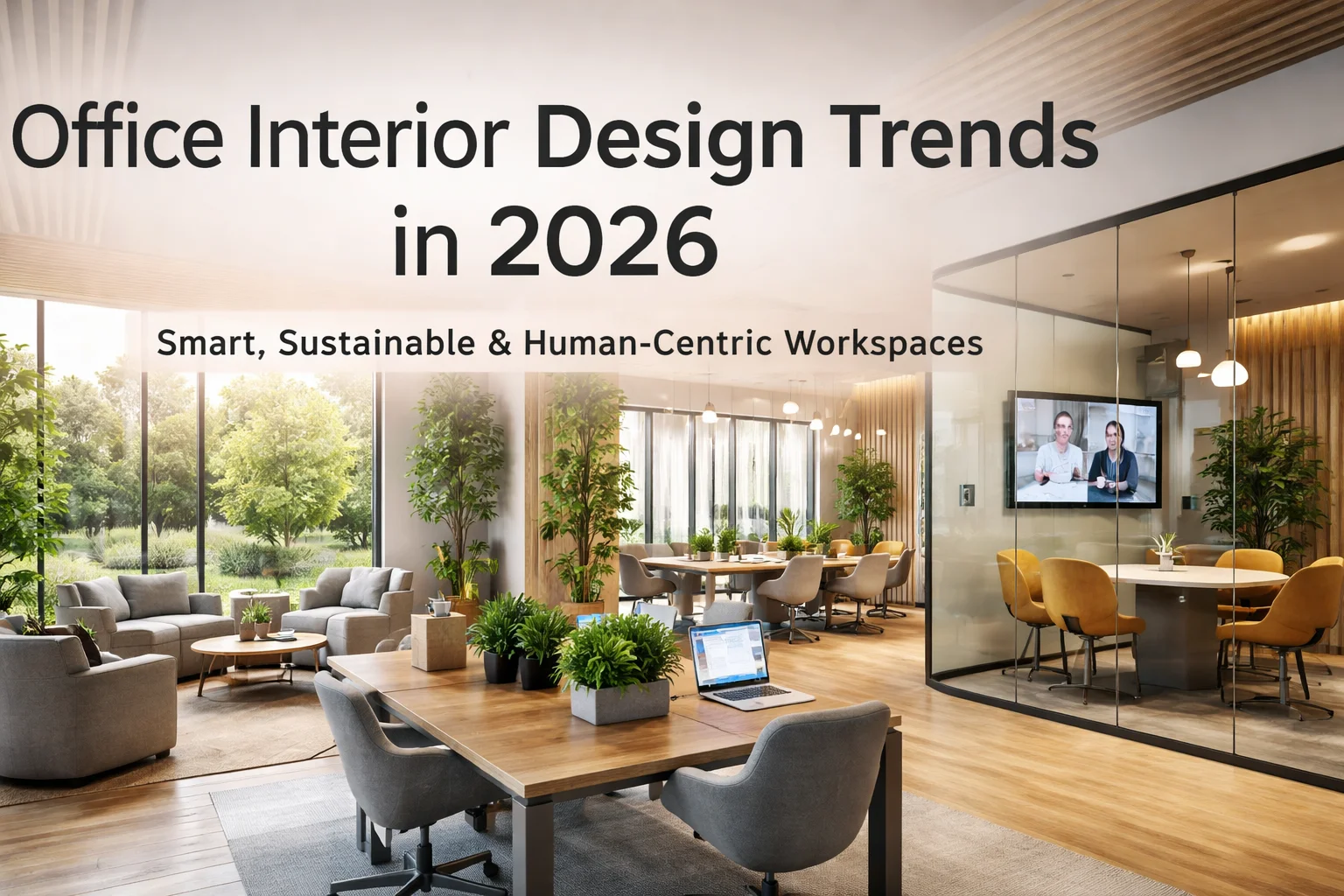
Office Interior Design Trends in 2026
Office Interior Design Trends in 2026: The Complete Guide to What’s In, What’s Out & What’s Next
The modern workplace is undergoing its most significant transformation in decades. As businesses adapt to hybrid work models, changing employee expectations, rapid technological innovation, and stronger sustainability commitments, office interiors are no longer designed merely for seating capacity or hierarchy. Instead, Office Interior Design Trends in 2026 reflect a deeper shift toward human-centric, experience-driven, and future-ready workspaces.
In 2026, offices are becoming destinations—places employees want to come to, not just have to. From intelligent spatial planning and wellness-focused design to smart technology integration and sustainable materials, office interiors are redefining how productivity, collaboration, and culture coexist.
This comprehensive 3,500–4,000 word trend report explores Office Interior Design Trends in 2026 in detail, covering colors, materials, furniture, lighting, spatial planning, technology, sustainability, acoustics, and common mistakes—helping decision-makers design offices that truly perform.
Why Office Interior Design Trends in 2026 Matter More Than Ever
The workplace of 2026 is shaped by long-term changes rather than short-term fads. Hybrid work is now permanent, Gen Z is entering the workforce with different values, and businesses are increasingly evaluated on employee well-being and environmental responsibility.
Office Interior Design Trends in 2026 respond to five major forces:
- Hybrid Work Culture – Offices must support collaboration, focus work, and remote connectivity simultaneously.
- Employee Wellness & Mental Health – Burnout prevention and comfort are now business priorities.
- Technology Integration – Smart offices improve efficiency, energy use, and experience.
- Sustainability & ESG Goals – Interior design plays a role in reducing carbon footprint.
- Brand Identity & Experience – Offices communicate culture, values, and innovation.
An office designed without these considerations quickly becomes outdated, inefficient, and unattractive to modern talent.
Office Interior Design Trends in 2026: What’s In & What’s Out (Quick Overview)
Before diving deep, here’s a snapshot of what defines office interiors in 2026.
What’s IN for 2026
- Hybrid-ready, activity-based layouts
- Warm, earthy, and calming color palettes
- Sustainable and low-VOC materials
- Modular, ergonomic furniture systems
- Smart lighting and automation
- Biophilic and wellness-focused design
- Acoustic planning and privacy zones
What’s OUT in 2026
- Rigid cubicles and fixed desk layouts
- Cold, all-white corporate interiors
- Excessive glass without sound control
- Overhead-only harsh lighting
- Cluttered cables and visible tech hardware
These shifts form the foundation of Office Interior Design Trends in 2026.
Color Trends in Office Interior Design 2026: From Sterile to Sensory
Color plays a powerful psychological role in office environments. In 2026, offices are moving away from clinical palettes toward colors that support focus, calmness, creativity, and emotional well-being.
Trending Office Colors in 2026
1. Earthy Neutrals
Shades like beige, sand, taupe, warm grey, and clay dominate office interiors. These tones create grounding environments and reduce visual fatigue.
2. Muted Greens & Olive Tones
Inspired by nature, greens promote balance and calm—making them ideal for focus zones and meeting rooms.
3. Terracotta, Rust & Warm Accents
Used sparingly, these tones encourage creativity and energy in collaboration spaces.
4. Deep Blues & Charcoal
Perfect for executive offices and concentration zones, darker hues provide visual depth and professionalism.
5. Brand-Driven Color Accents
Offices in 2026 integrate brand colors subtly through feature walls, furniture upholstery, and artwork rather than overwhelming the space.
What’s Out: stark white walls, icy greys, overly bright corporate blues.
Color strategy is now a key pillar of Office Interior Design Trends in 2026, not an afterthought.
Material Trends: Sustainable, Textured & Performance-Driven
Materials define both the visual and functional quality of office interiors. In 2026, material choices prioritize sustainability, tactile comfort, acoustics, and durability.
Key Material Trends in 2026
Low-VOC & Eco-Friendly Materials
Paints, adhesives, laminates, and finishes with low chemical emissions improve indoor air quality and employee health.
Recycled & Upcycled Materials
Recycled wood, metal, and PET acoustic panels are widely used to meet sustainability goals.
Textured Laminates & Natural Finishes
Visible wood grain, stone textures, and fabric surfaces replace glossy, artificial finishes.
Acoustic Materials as Design Features
Felt panels, fabric walls, and sound-absorbing ceilings are both functional and aesthetic.
Natural Stone & Concrete Accents
Used in receptions and collaborative areas for durability and premium appeal.
Material innovation is a defining element of Office Interior Design Trends in 2026, blending responsibility with sophistication.
Furniture Trends in Office Interior Design 2026: Flexible, Ergonomic & Modular
Furniture in 2026 offices is no longer static. It adapts to changing team sizes, tasks, and work styles.
Furniture Styles Defining 2026 Offices
Modular Workstations
Desks and tables that can be reconfigured easily support agile teams and future expansion.
Sit-Stand & Height-Adjustable Desks
Encouraging movement and better posture, these desks are now mainstream.
Ergonomic Seating
Chairs with lumbar support, adjustable arms, and breathable materials are essential, not optional.
Collaborative Furniture
Soft seating, high tables, and informal lounges encourage brainstorming and interaction.
Mobile Storage & Lightweight Units
Compact, movable storage replaces bulky cabinets.
What’s Out: fixed desks, oversized furniture, one-size-fits-all layouts.
Furniture flexibility is central to Office Interior Design Trends in 2026.
Lighting Trends: Human-Centric & Smart Illumination
Lighting has evolved from basic utility to a wellness-focused design element. In 2026, lighting supports circadian rhythms, productivity, and energy efficiency.
Office Lighting Trends in 2026
Circadian Lighting Systems
Lighting that adjusts color temperature throughout the day to align with natural biological rhythms.
Layered Lighting Design
Combining ambient, task, and accent lighting for comfort and visual interest.
Task-Specific Lighting
Focused illumination for desks, meeting rooms, and collaboration areas.
Sensor-Based & Daylight-Responsive Lighting
Lights automatically adjust based on occupancy and natural light levels.
Warm LED Tones
Replacing harsh white lights with softer, warmer illumination.
Lighting innovation is a core pillar of Office Interior Design Trends in 2026, improving comfort while reducing energy consumption.
Spatial Planning Trends: Designing for Hybrid Work in 2026
One of the most critical shifts in Office Interior Design Trends in 2026 is spatial planning. Offices are no longer organized by hierarchy or departments alone.
Activity-Based Zoning
Focus Zones
Quiet areas with acoustic treatment for deep work.
Collaboration Zones
Open, flexible spaces for brainstorming, teamwork, and informal meetings.
Phone Booths & Call Pods
Essential for hybrid meetings and private conversations.
Flexible Meeting Rooms
Movable partitions allow spaces to expand or contract as needed.
Wellness & Recharge Rooms
Spaces for relaxation, prayer, or mental breaks.
This zoning approach ensures offices support multiple work styles simultaneously.
Technology Integration: Smart Offices Without Visual Clutter
Technology in 2026 offices is embedded seamlessly into design rather than dominating it.
Smart Office Features in 2026
- Wireless charging desks and surfaces
- Smart glass partitions with switchable privacy
- AI-powered meeting room booking systems
- Occupancy sensors for space optimization
- Integrated AV systems for hybrid collaboration
Office Interior Design Trends in 2026 emphasize invisible technology—functional, intuitive, and aesthetically clean.
Biophilic Design & Wellness-Centric Offices
Biophilic design is no longer a trend—it’s a necessity. In 2026, offices integrate nature-inspired elements to support physical and mental health.
Biophilic Elements in 2026 Offices
- Indoor plants and green walls
- Maximized natural daylight
- Organic textures and materials
- Nature-inspired color palettes
- Visual connections to outdoor spaces
Studies consistently show biophilic offices improve focus, reduce stress, and enhance creativity—making them integral to Office Interior Design Trends in 2026.
Acoustic Design: Solving the Open-Office Challenge
Noise is one of the biggest complaints in modern offices. In 2026, acoustic planning is built into design from day one.
Acoustic Solutions Trending in 2026
- Acoustic ceiling baffles and clouds
- Fabric wall panels and felt partitions
- Sound-absorbing carpets and flooring
- Enclosed phone booths and meeting pods
Balanced acoustics ensure collaboration without chaos.
Sustainability & ESG-Focused Office Interiors
Sustainability is no longer just about materials—it’s about long-term impact.
Sustainable Office Design Practices in 2026
- Energy-efficient lighting and HVAC planning
- Modular interiors that reduce future waste
- Locally sourced materials to cut transport emissions
- Furniture designed for longevity and reuse
Sustainable decisions define responsible Office Interior Design Trends in 2026.
Common Office Interior Design Mistakes to Avoid in 2026
Even modern offices can fail if trends are applied blindly.
Mistakes to Avoid
- Designing for aesthetics without function
- Ignoring hybrid work requirements
- Overusing glass without acoustics
- Following trends without brand alignment
- Poor cable management and storage planning
Avoiding these ensures longevity and performance.
Expert Perspective: How to Choose the Right Office Interior Design Trends in 2026
Not every trend suits every organization. The most successful offices in 2026 are those that adapt trends to their culture, budget, and operational needs.
Key considerations include:
- Team size and growth plans
- Nature of work (focus vs collaboration)
- Brand personality and values
- Sustainability goals
- Technology requirements
Office Interior Design Trends in 2026 work best when customized—not copied.
Conclusion: Designing Offices That Perform in 2026 and Beyond
The office of 2026 is flexible, intelligent, and deeply human-centric. By embracing the right Office Interior Design Trends in 2026, businesses can create workplaces that attract talent, boost productivity, and reflect modern values.
From color psychology and sustainable materials to smart technology and wellness-focused planning, the future office is about balance—between people, performance, and purpose.
FAQ
1. What are the most important Office Interior Design Trends in 2026?
The most important Office Interior Design Trends in 2026 focus on creating flexible, human-centric, and technology-enabled workspaces. These trends include hybrid-ready layouts, wellness-focused design, biophilic elements, smart lighting, sustainable materials, and modular furniture. Offices are no longer rigid or hierarchy-driven; instead, they are designed around activities such as collaboration, focus, and relaxation. The goal of office interiors in 2026 is to improve productivity, employee well-being, and brand experience while supporting long-term adaptability.
2. How do Office Interior Design Trends in 2026 support hybrid work culture?
Office Interior Design Trends in 2026 are deeply influenced by hybrid work culture. Modern offices are planned with activity-based zoning rather than fixed seating. Focus pods, collaboration zones, phone booths, and flexible meeting rooms allow employees to switch between tasks seamlessly. Offices now support both in-person and remote collaboration through integrated technology and adaptable layouts. These trends ensure that the office remains relevant and functional even when teams work partially from home.
3. Why is wellness a key part of Office Interior Design Trends in 2026?
Wellness is central to Office Interior Design Trends in 2026 because employee health directly impacts productivity and retention. Offices now include better natural lighting, ergonomic furniture, biophilic elements, acoustic comfort, and calming color palettes. Wellness rooms, quiet zones, and improved indoor air quality are also becoming standard. These design choices help reduce stress, prevent burnout, and create a more supportive work environment that aligns with modern workforce expectations.
4. What role does technology play in Office Interior Design Trends in 2026?
Technology plays a seamless and invisible role in Office Interior Design Trends in 2026. Smart lighting systems, occupancy sensors, wireless charging, AI-based meeting room booking, and integrated AV solutions are embedded into the design. Instead of visible cables and bulky hardware, technology is hidden within furniture and architectural elements. This integration improves efficiency, supports hybrid meetings, and enhances user experience without compromising aesthetics.
5. Which color palettes are trending in Office Interior Design Trends in 2026?
Office Interior Design Trends in 2026 favor warm, earthy, and calming color palettes over cold corporate tones. Shades like beige, taupe, sand, olive green, terracotta, and muted blues dominate office interiors. These colors help reduce visual stress and create emotionally balanced spaces. Brand colors are used subtly as accents rather than overwhelming the workspace. The shift reflects a move toward more welcoming, human-centric office environments.
6. How important is sustainability in Office Interior Design Trends in 2026?
Sustainability is a core pillar of Office Interior Design Trends in 2026. Offices are designed using low-VOC materials, recycled components, energy-efficient lighting, and modular systems that reduce waste. Sustainable design not only lowers environmental impact but also improves indoor air quality and long-term operational efficiency. Companies are increasingly aligning office interiors with ESG goals, making sustainability both a design and business priority in 2026.
7. What furniture styles define Office Interior Design Trends in 2026?
Furniture in Office Interior Design Trends in 2026 is modular, ergonomic, and flexible. Height-adjustable desks, ergonomic chairs, collaborative seating, and mobile storage solutions are widely used. Furniture is designed to support different work modes—focus, collaboration, and relaxation—while allowing easy reconfiguration as teams grow or workflows change. Fixed and bulky furniture is being replaced with lightweight, adaptable systems that future-proof office interiors.
8. How is lighting evolving in Office Interior Design Trends in 2026?
Lighting is a wellness-driven feature in Office Interior Design Trends in 2026. Circadian lighting systems that change throughout the day help align with natural body rhythms. Layered lighting—combining ambient, task, and accent lighting—improves comfort and functionality. Motion sensors and daylight-responsive systems enhance energy efficiency. Harsh overhead lighting is being replaced by softer, warmer illumination that supports focus and reduces eye strain.
9. What is activity-based planning in Office Interior Design Trends in 2026?
Activity-based planning is a major component of Office Interior Design Trends in 2026. Instead of assigning fixed desks, offices are designed with zones for specific activities such as deep work, collaboration, meetings, and relaxation. Employees choose spaces based on their tasks for the day. This approach improves space utilization, supports hybrid work, and allows offices to adapt easily to changing team dynamics.
10. How do Office Interior Design Trends in 2026 improve employee productivity?
Office Interior Design Trends in 2026 improve productivity by aligning the workspace with how people actually work. Ergonomic furniture reduces physical strain, acoustic solutions minimize distractions, and smart lighting enhances focus. Zoning allows employees to choose the right environment for their tasks, while wellness features reduce stress. Together, these elements create an environment that supports efficiency, creativity, and sustained performance.
11. Why is acoustic design important in Office Interior Design Trends in 2026?
Acoustic comfort is critical in Office Interior Design Trends in 2026, especially in open and hybrid offices. Sound-absorbing panels, acoustic ceilings, carpets, and phone booths help control noise levels. Proper acoustic planning ensures collaboration does not disturb focused work. As offices become more flexible and multifunctional, managing sound is essential for maintaining comfort and productivity across different work zones.
12. Are open-plan offices still relevant in Office Interior Design Trends in 2026?
Yes, but with significant evolution. Office Interior Design Trends in 2026 retain open-plan concepts while addressing their drawbacks. Open spaces are now balanced with privacy pods, acoustic partitions, and quiet zones. The focus is on flexibility rather than complete openness. This hybrid approach encourages collaboration while still supporting concentration and individual work, making open-plan offices more functional and comfortable.
13. How can businesses choose the right Office Interior Design Trends in 2026?
To choose the right Office Interior Design Trends in 2026, businesses should consider their work culture, team size, future growth, and brand identity. Not every trend suits every organization. The best approach is to adapt trends based on functionality, budget, and long-term needs rather than blindly following design fads. A strategic, customized approach ensures the office remains relevant for years.
14. What mistakes should be avoided when following Office Interior Design Trends in 2026?
Common mistakes include prioritizing aesthetics over functionality, ignoring hybrid work needs, overusing glass without acoustic solutions, and copying trends without aligning them to brand values. Office Interior Design Trends in 2026 should enhance daily operations, not complicate them. Proper planning, user-focused design, and future adaptability are essential to avoid costly redesigns later.
15. How will Office Interior Design Trends in 2026 shape the future workplace?
Office Interior Design Trends in 2026 are shaping workplaces that are flexible, inclusive, and experience-driven. Offices are becoming hubs for collaboration, culture, and innovation rather than just workstations. With a focus on wellness, sustainability, and smart technology, these trends ensure offices remain relevant in a hybrid future. The result is a workplace that supports people, performance, and purpose equally.
Vistaar Designs is recognized as the Best Office Interior Designer in Noida, delivering future-ready, functional, and visually striking workspaces for modern businesses. With a strong focus on employee wellness, smart space planning, and sustainable design, Vistaar Designs creates offices that enhance productivity and reflect brand identity. From concept to execution, every project is tailored to support hybrid work culture, ergonomic comfort, and seamless technology integration. Trusted by startups, corporates, and enterprises, Vistaar Designs combines creativity with technical expertise to design offices that are efficient, inspiring, and built for long-term growth.